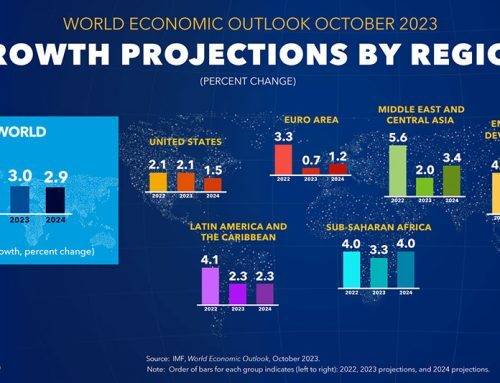
Economic recovery across Latin America continues to remain mixed as a result of differing government responses to the pandemic. Economies with more aggressive stimulus plans are seeing a faster recovery while those with more conservative stimulus plans are seeing a greater interest in foreign investment. However, broad currency stabilizations throughout LATAM and increasing global demand bode well for 2021.
As we enter 2021, our team continues to monitor core indicators and trade policy to help customers make informed buying decisions. We compile these factors into a brief monthly newsletter that can be delivered right to your inbox. Sign up to receive it today!
Market Metrics to Watch
Manufacturing PMI
Despite improving marginally month-over-month since April, Mexico continues to struggle in its economic recovery as it relates to manufacturing. Brazil’s PMI fell month-over-month, but remains in a state of expansion for the sixth month in a row.
Capacity Utilization
Capacity utilization increased month-over-month for Brazil and Mexico on October, while South Africa’s capacity utilization decreased month-over-month in September.
Mexico saw a strong month-over-month uptick in capacity utilization, possibly signaling some level of manufacturing recovery. It is, however, still below 2019 levels (81.1). Brazil also saw an uptick in capacity utilization month-over-month, and is above 2019 levels (78.0).
Imports
Below is a chart showing November import levels for Mexico, Brazil and Chile. Imports to Mexico fell year-over-year by 3.9% largely due to lower purchases of oil and capital goods. Imports to Brazil and Chile fell slightly month-over-month and remain below 2019 levels.
Increasing Car Production
Both Mexico and Brazil saw year-over-year gain in car production by 1.4% and 4.09%, respectively. However, month-over-month, car production in Mexico declined by about 35k units and increased marginally in Brazil by fewer than 2k units. For Brazil, this is the weakest month-over-month increase in seven months.
Currencies Growing Stronger
After a spike of devaluation in March 2020 for both the Peso and Real, both currencies are beginning to regain value and/or stabilize. Mexico’s peso, in particular, hit a 9-month high earlier in December of 19.68 pesos per dollar compared to 26 per dollar in March during the currency’s low. Currency values above are as-of 1/4/2021.
Executive Perspective
Leeco Trading’s President and CEO, Denton Nordhues, shares his insights into the factors most impacting international trade going into 2021.
“2020 was a tumultuous and unpredictable year. The COVID-19 pandemic disrupted all major Latin American markets and made the global economy extremely volatile. While we know COVID-19 will remain a challenge in 2021, I want to encourage you to reach out to our dedicated Trading team. Our team is carefully watching economic indicators, trade policy and more to ensure we help our customers make the best strategic buying decisions. Thank you for your partnership and support and we look forward to continue working together in the New Year.”

Denton Nordhues, President & CEO
Economic News to Follow
As the world looks towards 2021, it appears that Latin America is well positioned for growth.
Investors Warm to Mexico Despite Economy
Mexico in 2020 plunged into its steepest recession in decades and suffered a credit ratings downgrade, yet the peso currency and instruments that measure sovereign risk now tell a different story: that investors are again warming to the country.
Employment Recovery Strong in Mexico
The Mexican economy recovered in the last four months 50 percent of the formal jobs that were lost after the crisis caused by COVID-19, which means a faster recovery compared to past crises. The boost in the labor market was due to the accelerated reactivation in the US economy that benefited the local manufacturing industry.
Commodities 2021: Brazil to Remain the Major Global Sugar Supplier
A high sugar price in Brazilian real equivalent and the fuel ethanol demand uncertainties in 2021 are expected to encourage producers to keep maximizing sugar production to supply a deficit global market. Brazil proved to be a consistent sugar supplier in 2020, able to increase its production by more than 44.2% in a crop year. The country, thus, changed the global supply and demand picture from a possible deficit in the global 2019-20 crop year (October-September) into a small surplus of 121,000 metric tons raw value, or mtrv, according to S&P Global Platts Analytics.
Brazil Extends Zero Import Tax on Coronavirus Products
A reported by Reuters, Brazil’s government has extended zero import taxes on 298 products considered essential in the fight against the COVID-19 pandemic for six more months according to the country’s foreign trade authority Camex. The zero import tax rate on a range of products covering medicines, supplies and testing equipment for virus detection and vaccines will be extended to June 30 next year from the previous cut-off of December 31 this year.
Market Takeaway
Economic recovery across Latin America continues to remain mixed as a result of differing government responses to the pandemic. Economies with more aggressive stimulus plans are seeing a faster recovery while those with more conservative stimulus plans are seeing a greater interest in foreign investment. However, broad currency stabilizations throughout LATAM and increasing global demand bode well for 2021.